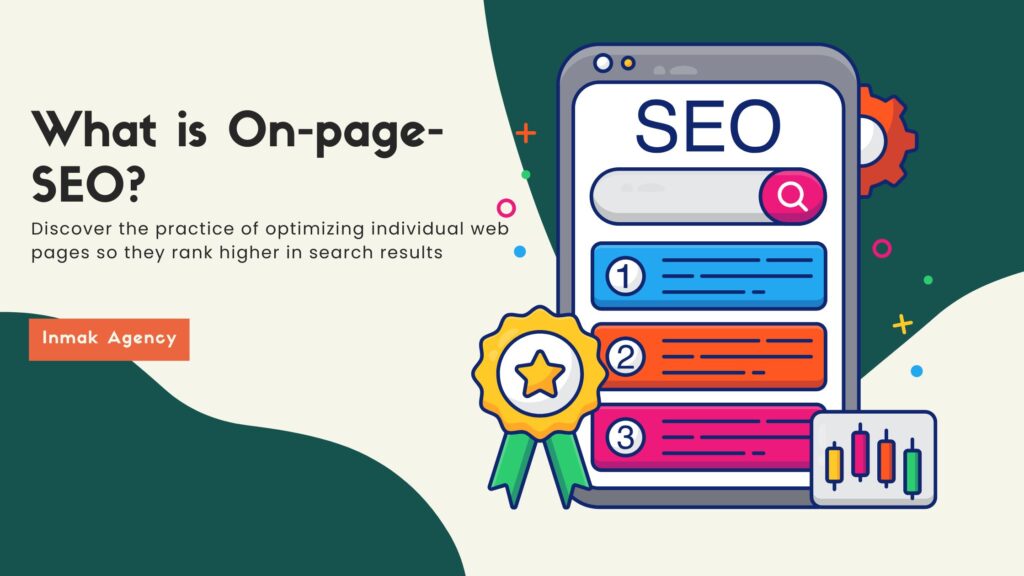
When potential clients search for your services, Google’s job is to connect them with the most relevant, high-quality results. On-page SEO is how you tell search engines and visitors that your website is the right choice. Done right, it improves rankings, enhances user experience, and ultimately drives more conversions.
What Is On-Page SEO?
On-page SEO refers to the practice of optimizing individual web pages so they rank higher in search results. This includes:
- Keyword placement in titles, headings, and body text
- Internal linking between related pages
- Image optimization (alt text, file names)
- Meta tags and descriptions
Unlike off-page SEO (like backlinks), this is 100% under your control.
Why On-Page SEO Matters for Business Growth?
Research shows that 53% of all website traffic comes from organic search (BrightEdge). Without on-page SEO, your site may never reach its potential audience. More visibility means more opportunities to turn visitors into leads.
Key On-Page SEO Elements to Implement Now:
- Title Tags & Meta Descriptions: Include your main keyword naturally.
- Header Tags (H1, H2, H3): Organize content for readability.
- Keyword Placement: Focus on 1-2 primary keywords per page.
- Mobile Responsiveness: Over 60% of searches happen on mobile.
- Page Speed: A delay of even 1 second can drop conversions by 7% (Neil Patel).
4 Common On-Page SEO Mistakes
- Keyword stuffing
- Missing or duplicate title tags
- Not using descriptive image alt text
- Ignoring mobile optimization
Ready to Optimize Your Website?
On-page SEO isn’t a one-time task, it’s an ongoing process. If you want higher rankings, better visibility, and more leads, now’s the time to take action. Book Your Free SEO Review and let us show you where your site stands.